
Chickpeas
High-quality green peas sourced from sustainable farms. Ideal for global export and processing.
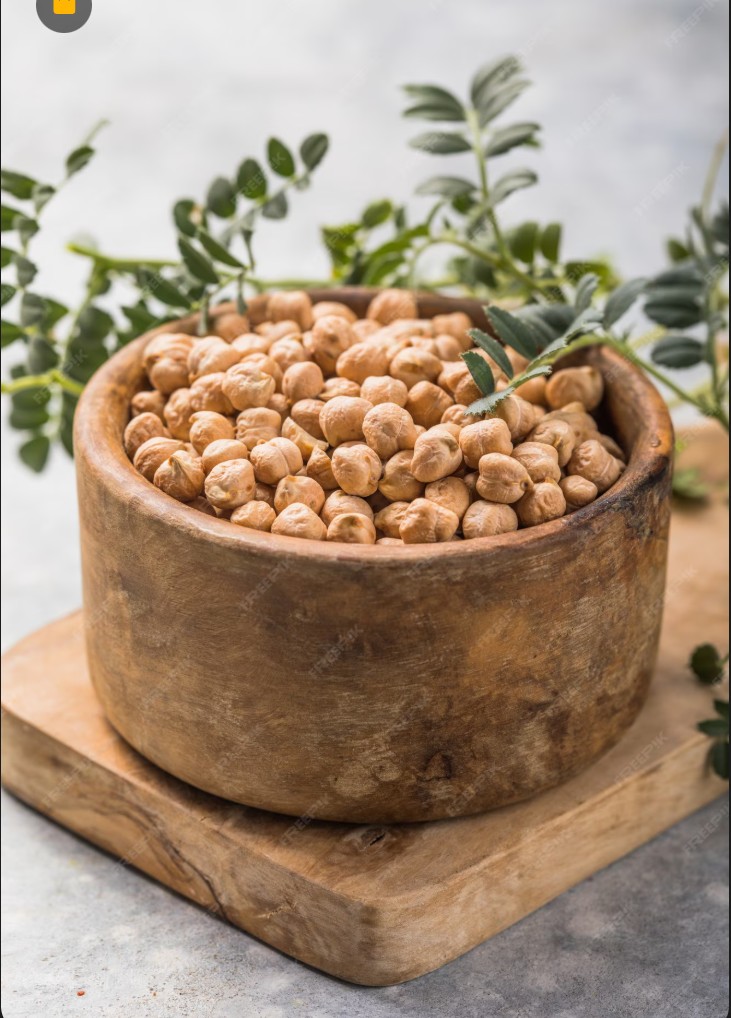
Main Varieties of Chickpeas
- Kabuli Chickpeas
- Appearance: Large, round, beige-colored seeds with a smooth coat.
- Flavor & Texture: Mild flavor, softer texture when cooked.
- Common Uses: Used in salads, hummus, and stews.
- Origin: Mediterranean region, widely grown in India, Turkey, and Australia.
- Desi Chickpeas
- Appearance: Smaller, darker seeds with a rough coat; colors vary from brown, black, to greenish.
- Flavor & Texture: Earthier flavor, firmer texture.
- Common Uses: Ground into chickpea flour (besan), used in Indian dishes like chana masala.
- Origin: Mainly grown in India, Ethiopia, Mexico, and Iran.
- Black Chickpeas (Kala Chana)
- Appearance: Smaller, dark brown or black seeds with a rough surface.
- Flavor & Texture: Strong, nutty flavor; firm texture.
- Common Uses: Popular in Indian cuisine, often used in curries and snacks.
- Origin: Mainly India and Pakistan.
- Green Chickpeas
- Appearance: Fresh green seeds, harvested before drying.
- Flavor & Texture: Sweet and tender, eaten fresh or dried.
- Common Uses: Eaten fresh like peas or dried for cooking.
- Origin: Various regions; less common commercially.
Additional Notes
- Chickpeas are classified botanically into two types mainly based on seed size and color: Kabuli (large, light-colored) and Desi (small, dark-colored).
- They are drought-resistant and adapt well to arid climates, making them important in crop rotations and sustainable agriculture.
- Chickpeas are rich in protein, fiber, vitamins, and minerals, making them a key source of nutrition globally.